Choosing the right non-stick pan can transform your cooking experience, turning everyday meals into effortless culinary creations. For years, home cooks have sought the perfect balance of durability, safety, and superior non-stick performance. With a myriad of options flooding the market, two prominent contenders have emerged, capturing attention with their innovative coatings: granite and diamond. But which one truly stands out in the kitchen? This comprehensive guide will delve deep into the world of non-stick cookware, meticulously comparing granite and diamond coatings to help you make an informed decision that suits your cooking style and budget.
What is a Non-Stick Pan? Why Should You Use It?
A non-stick pan is a type of cookware that features a specialized coating designed to prevent food from adhering to its surface during cooking. This innovative technology has revolutionized kitchens worldwide, making meal preparation and cleanup significantly easier. Historically, non-stick coatings began with Polytetrafluoroethylene (PTFE), commonly known as Teflon, but advancements have introduced a range of safer and more durable alternatives.
The primary advantages of using a non-stick pan are compelling. They allow for cooking with minimal oil or fat, promoting healthier eating habits. Foods slide off effortlessly, ensuring perfect results, especially for delicate items like eggs and pancakes. Moreover, the easy-release surface simplifies post-meal cleanup, often requiring just a quick wipe or gentle wash. Non-stick pans are incredibly versatile, ideal for frying, sautéing, searing, and simmering a wide variety of dishes, from delicate fish to stir-fries.
Popular Non-Stick Pan Types on the Market
The non-stick cookware landscape offers diverse options, each with unique characteristics. Beyond traditional PTFE (Teflon) and ceramic coatings, granite and diamond-infused pans have gained considerable popularity, often marketed for their enhanced durability and performance.
Granite Coating Non-Stick Pans
Table is empty.Despite its name, “granite cookware” is not made from solid granite. Instead, it typically refers to a metal base, often aluminum or stainless steel, coated with multiple layers that mimic the speckled appearance of natural stone. This multi-layered non-stick surface is usually a form of enamel or ceramic, sometimes reinforced with mineral particles. Modern granite coatings are designed to be PFOA-free, addressing some of the historical safety concerns associated with older non-stick materials.
Granite-coated pans are appreciated for their robust feel and good heat distribution, which helps prevent hot spots during cooking. Many users find them more resistant to scratches and chipping compared to standard ceramic coatings, contributing to their perceived durability. While generally non-stick, their slickness can vary between brands, and some may require a small amount of oil for optimal food release. They are often compatible with various cooktops, including induction, making them a versatile choice for many households.
Diamond Coating Non-Stick Pans
Diamond coating in non-stick pans refers to the integration of industrial-grade diamond particles into the pan’s non-stick layer. These tiny diamonds are either infused into a ceramic-based coating or, in more advanced versions, permanently fused to the metal surface through a process called vacuum brazing. The inclusion of diamonds leverages their extreme hardness and excellent thermal conductivity.
Diamond-infused ceramic pans offer enhanced scratch resistance and improved heat distribution over standard ceramic. However, the true innovation lies in vacuum-brazed diamond cookware, where actual diamond crystals are directly bonded to the pan’s metal base in a high-temperature, oxygen-free environment. This creates an incredibly durable, chemical-free (PFAS and PFOA-free) surface that boasts superior scratch resistance and heat transfer. Diamond-coated pans are prized for their exceptional longevity and consistent non-stick performance, maintaining their efficacy even with rigorous use. They heat up quickly and evenly, ensuring consistent cooking results for delicate and high-heat dishes alike.
Comparison Table: Granite vs. Diamond Coating Non-Stick Pans
Understanding the distinct features of each coating is crucial for making an informed decision. Here’s a comparison of granite and diamond coating non-stick pans:
| Feature | Granite Coating | Diamond Coating |
|---|---|---|
| Composition | Metal base (aluminum/steel) with multi-layered enamel, ceramic, or reinforced PTFE coating for stone-like look. | Metal base (aluminum/steel) with diamond particles infused into ceramic or PTFE layer; or actual diamonds vacuum-brazed onto metal. |
| Non-Stick Performance | Good; generally requires minimal oil. | Excellent; often superior and longer-lasting, especially with vacuum-brazed. |
| Durability & Scratch Resistance | Good; more resistant than standard ceramic, but can chip/scratch with harsh use. | Excellent; diamonds significantly enhance hardness and scratch resistance, especially vacuum-brazed. |
| Heat Distribution | Good; heats evenly, reducing hot spots. | Excellent; diamonds are superb heat conductors, ensuring very fast and even heating. |
| Safety | Often PFOA-free; check for PFAS if PTFE-based. | Usually PFAS-free; vacuum-brazed is chemical-free (no PTFE/PFOA/PFAS). |
| Lifespan | Moderate to High (with proper care). | High to Very High (especially vacuum-brazed, offering exceptional longevity). |
| Price | Moderate. | Moderate to High (vacuum-brazed typically costs more). |
| Maintenance | Hand wash recommended; some are dishwasher safe. | Hand wash recommended; vacuum-brazed tolerates more vigorous cleaning. |
Expert Tips for Choosing the Perfect Non-Stick Pan
Selecting the ideal non-stick pan, whether granite or diamond-coated, involves more than just aesthetics. Consider these expert tips to ensure your choice aligns with your culinary needs and preferences:
First, assess your cooking needs. How many people do you typically cook for? What types of dishes do you prepare most often—delicate eggs, stir-fries, or searing meats? The frequency and style of your cooking will guide your decision on pan size, depth, and material. Additionally, verify the pan’s compatibility with your specific stovetop, whether it’s induction, gas, electric, or ceramic.
Prioritize safety and material composition. Modern non-stick cookware should be PFOA-free, and ideally PFAS-free, for peace of mind. Diamond-coated pans, especially those utilizing vacuum-brazed technology, are often a top choice for those seeking a truly chemical-free cooking surface. While granite coatings are generally safe, always check the manufacturer’s specifications regarding their non-stick composition.
Next, focus on durability and heat resistance. If you cook frequently or tend to use higher heat, a pan with superior scratch resistance and heat tolerance, like many diamond-coated options, will offer better long-term performance. Inspect the pan’s surface for any imperfections, ensuring it is smooth and uniform. A robust, well-attached handle that remains cool to the touch is also a sign of quality. The pan’s base should be flat and thick to ensure even heating and prevent warping over time.
Finally, research reputable brands and read user reviews. Brands with a strong reputation for quality and customer service often provide better products and warranties. While direct product recommendations are not the focus here, looking into brands known for their granite or diamond non-stick lines and their commitment to health and durability can be highly beneficial.
Mastering Non-Stick Pan Care: Usage and Maintenance
Proper care is paramount to extending the life and maintaining the performance of any non-stick pan. Following these guidelines will ensure your granite or diamond-coated pan remains a reliable kitchen companion for years to come.
Before the first use, always wash your new pan with warm soapy water and rinse thoroughly. While many modern non-stick pans don’t require traditional seasoning, some manufacturers may suggest a light oil rub. Always refer to your pan’s specific instructions.
During cooking, use appropriate utensils. Wooden, silicone, or heat-resistant plastic tools are gentle on non-stick surfaces and prevent scratches. Avoid metal utensils, as they can damage the coating, regardless of how durable it claims to be. It’s also crucial to avoid overheating an empty pan, as this can degrade the non-stick properties and, in some cases, release fumes. Always add a small amount of oil or food before heating. Maintain medium to low heat for most cooking tasks, as non-stick coatings are not designed for extreme high-heat searing unless explicitly stated by the manufacturer.
After cooking, allow the pan to cool completely before washing. Thermal shock from hot-to-cold can warp the pan or damage the coating. For cleaning, gentle hand washing with warm water and mild dish soap is generally recommended. Use a soft sponge or cloth, avoiding abrasive scrubbers, steel wool, or harsh detergents. For stubborn residue, soak the pan in warm soapy water for a short period before gently wiping it clean. Always dry your pan thoroughly before storing it to prevent water spots and extend its lifespan. Stacking pans with a felt protector or cloth between them can also help prevent scratches.
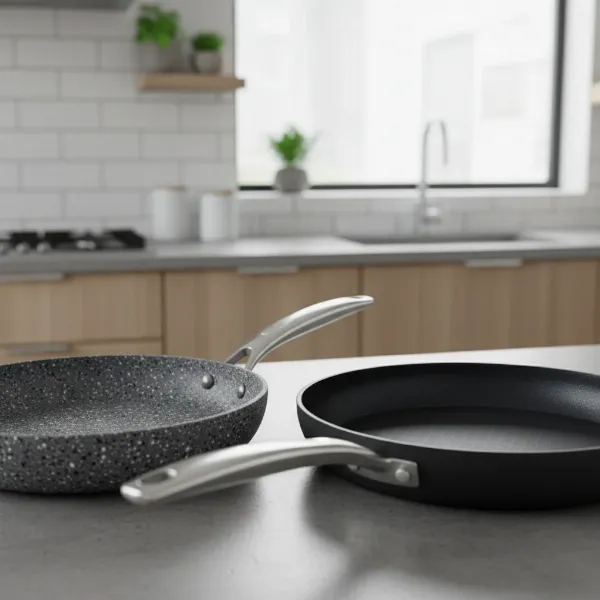 A side-by-side comparison of granite and diamond-coated non-stick pans on a kitchen counter, showcasing their unique textures and materials.
Top 5 Non-Stick Pans: Recommendations for Your Kitchen
When considering the vast array of non-stick pans available, focusing on key attributes will help you find a suitable option. For those prioritizing ultimate durability and a chemical-free surface, a high-quality vacuum-brazed diamond-coated pan is often the gold standard. Its fused diamond crystals offer unparalleled scratch resistance and exceptional heat conductivity, making it ideal for frequent, demanding use.
If you seek a balance of robustness, good heat performance, and a visually appealing design without the premium price of vacuum-brazed diamond, a well-constructed granite-coated pan can be an excellent choice. Look for multi-layered coatings and a sturdy aluminum or stainless steel base for optimal results.
For home cooks who value lightweight design and efficient heat-up, ceramic-based non-stick pans, especially those infused with diamond particles for added resilience, provide a great everyday solution. These are often PFOA-free and handle moderate temperatures well.
Finally, for induction cooktop users, ensuring the pan has a compatible magnetic base (often stainless steel) is crucial. Both granite and diamond-coated options are available with induction-ready designs, offering versatility across different kitchen setups. Ultimately, the best pan is one that reliably meets your daily cooking demands and brings joy to your culinary journey.
Conclusion
Navigating the world of non-stick cookware can be daunting, but understanding the core differences between granite and diamond coatings empowers you to make an informed choice. While granite-coated pans offer a robust, aesthetically pleasing, and generally durable option with good non-stick performance, diamond-coated pans, particularly those with vacuum-brazed technology, often represent the pinnacle of durability, scratch resistance, and chemical-free cooking. The exceptional heat conduction and longevity of diamond coatings provide a significant advantage for those seeking long-term value and high-performance cooking.
Ultimately, the perfect non-stick pan for your kitchen depends on your priorities: whether it’s the utmost durability and health safety, an appealing design with solid performance, or a balance of both within your budget. By considering your cooking habits, prioritizing safety, and focusing on quality construction, you can select a non-stick pan that will elevate your culinary adventures. What culinary delights will you create with your perfectly chosen non-stick pan?
Frequently Asked Questions
Are granite non-stick pans truly made of granite stone?
No, granite non-stick pans are not made of solid granite. The term “granite” refers to a multi-layered non-stick coating applied over a metal base (typically aluminum or stainless steel), designed to mimic the speckled appearance of natural stone. This coating is often ceramic, enamel, or a reinforced PTFE.
How do diamond particles improve non-stick pan performance?
Diamond particles enhance non-stick pan performance primarily by increasing the coating’s hardness, which boosts scratch resistance and overall durability. They are also excellent heat conductors, leading to faster and more even heat distribution across the pan’s surface, reducing hot spots and ensuring more consistent cooking.
Is diamond-coated cookware safe and free from harmful chemicals like PFAS?
Many modern diamond-coated pans, especially those where diamonds are infused into a ceramic base or fused using vacuum-brazed technology, are marketed as PFAS-free and PFOA-free. Vacuum-brazed diamond cookware, in particular, often eliminates chemical-based coatings entirely, offering a naturally safe cooking surface.
Which type of coating, granite or diamond, offers better longevity?
Diamond coatings, especially the vacuum-brazed type, generally offer superior longevity compared to granite coatings. The extreme hardness of diamonds provides exceptional resistance to wear and tear, meaning the non-stick properties tend to last significantly longer under proper care.
Can I use metal utensils on granite or diamond non-stick pans?
While some advanced diamond-coated pans (particularly vacuum-brazed versions) claim to tolerate metal utensils due to their extreme hardness, it’s generally best practice to use wooden, silicone, or heat-resistant plastic utensils on all non-stick pans, including granite and diamond, to preserve the coating and maximize its lifespan.
Are non-stick pans with granite or diamond coatings suitable for induction cooktops?
Yes, many granite and diamond-coated non-stick pans are designed to be compatible with induction cooktops. To ensure compatibility, look for pans that explicitly state “induction compatible” and feature a magnetic base, typically made of stainless steel.
What is the ideal heat setting for cooking with granite or diamond non-stick pans?
For most non-stick pans, including granite and diamond-coated varieties, it’s recommended to cook on medium to low heat. High heat can degrade the non-stick coating over time. Always preheat the pan with a small amount of oil or food to avoid overheating an empty pan.