In today’s health-conscious kitchens, the pursuit of truly chemical-free cooking has become a top priority. Many home cooks are now questioning the safety of traditional non-stick pans, especially those coated with chemicals like PFOA and PFOS. These substances, once ubiquitous in cookware, have raised significant health and environmental concerns, leading to a growing demand for safer alternatives. This guide will delve into what makes a pan truly chemical-free, exploring the best PFOA and PFOS free options available, and providing essential advice to help you select and maintain the perfect cookware for a healthier culinary journey.
What Are PFOA and PFOS, and Why Should You Avoid Them?
PFOA (Perfluorooctanoic Acid) and PFOS (Perfluorooctane Sulfonate) are synthetic chemicals belonging to a larger group known as PFAS (per- and polyfluoroalkyl substances). These “forever chemicals” were widely used in the manufacturing of various consumer products, including traditional non-stick cookware coatings like PTFE (polytetrafluoroethylene), commonly known by the brand name Teflon. While PTFE itself is generally considered stable, PFOA was historically used in its production process.
The concern stems from the fact that PFOA and PFOS are incredibly persistent in the environment and in the human body, accumulating over time. Research has linked exposure to these chemicals with potential health issues, including certain cancers, thyroid problems, immune system dysfunction, and developmental effects. Due to these growing concerns, PFOA was largely phased out of production in the United States by 2014 and banned in Europe even earlier. Although PFOS has also been largely removed, the broader category of PFAS chemicals remains a subject of ongoing scrutiny. Opting for PFOA and PFOS-free pans ensures you’re choosing cookware free from these historically problematic compounds, contributing to a safer cooking environment and reducing your exposure to persistent chemicals.
Exploring PFOA and PFOS Free Pan Alternatives
The market now offers a diverse range of cookware designed to provide excellent cooking performance without the reliance on PFOA and PFOS. Understanding the different types can help you make an informed decision for your kitchen.
Ceramic-Coated Nonstick Pans
Ceramic-coated pans offer a popular PFOA and PFOS-free non-stick solution. Their non-stick surface is typically derived from sand, specifically silicon dioxide, and applied as a gel that transforms into a smooth, ceramic-like coating upon heating. Brands like GreenPan and Caraway are prominent in this category.
- Pros: Excellent non-stick properties, vibrant color options, often oven-safe, and free from PFOA, PFOS, and often PTFE. They are considered a healthier choice due to the absence of these chemicals.
- Cons: The non-stick coating can be less durable than traditional PTFE over time and may degrade with high heat or abrasive cleaning. Requires gentle care to maintain its non-stick performance.
- Durability: Moderate, depending on brand and care.
- Price: Moderate to high.
|
Our Picks for the Best Non stick pan in 2026
As an Amazon Associate I earn from qualifying purchases.
|
||
| Num | Product | Action |
|---|---|---|
| 1 | SENSARTE Nonstick Frying Pan Skillet with Lid, 12 Inch Large Deep Frying Pan, 5 Qt Non Stick Saute Pan with Cover, Induction Pan, Healthy Non Toxic Cooking Pan with Helper Handle, PFOA PFOS Free |

|
| 2 | Tramontina Professional 8-Inch Non Stick Small Frying Pan, Heavy-Gauge Aluminum Skillet with Reinforced Nonstick Coating, Red Handle, Dishwasher and Oven Safe |
|
| 3 | Non Stick Frying Pans, 12-inch with Lid, Hybrid Fajita Pans Nonstick,non stick Skillets Stainless Steel, Dishwasher & Oven-Safe, Induction Compatible Cooking Pan, PFOA Free Cookware |
|
| 4 | CAROTE Nonstick Frying Pan Skillet,Non Stick Granite Fry Pan Egg Pan Omelet Pans, Stone Cookware Chef's Pan, PFOA Free,Induction Compatible(Classic Granite, 8-Inch) |
|
| 5 | Tramontina Professional 10-Inch Non Stick Frying Pan, Heavy-Gauge Aluminum Skillet with Reinforced Nonstick Coating, Red Handle, Dishwasher and Oven Safe |
|
| 6 | SENSARTE Nonstick Skillet, Deep Frying Pan 10/11/12-inch, Saute Pan with Lid, Stay-cool Handle, Healthy Stone Cookware Cooking Pan, Induction Compatible (10-Inch/3.5QT) |
|
| 7 | GoodCook Nonstick Sauté Pan, 10 Inch, Black |
|
| 8 | SENSARTE Nonstick Frying Pan Skillet, Swiss Granite Coating Omelette Pan, Healthy Stone Cookware Chef's Pan, PFOA Free (9.5 Inch) |
|
| 9 | SENSARTE Nonstick Frying Pan Skillet, Swiss Granite Coating Omelette Pan, Healthy Stone Cookware Chef's Pan, PFOA Free (8/9.5/10/11/12.5 Inch) (8 Inch) |
|
| 10 | Blue Diamond 10" Nonstick Frying Pan Skillet, Diamond Infused PFAS & PTFE-Free Ceramic Pot, Dishwasher & Oven Safe, Stay Cool Handle, Durable Non Toxic Metal Utensil Safe, Egg & Omelet Pan, Blue |
|
Cast Iron Pans
A timeless kitchen staple, cast iron pans offer natural non-stick properties once properly seasoned. They are made entirely of iron, making them inherently free of synthetic chemical coatings.
- Pros: Incredibly durable, excellent heat retention and even heating, naturally non-stick with seasoning, can last for generations, and safe for high-heat cooking. Adds a small amount of dietary iron to food.
- Cons: Heavy, requires regular seasoning and specific cleaning methods to prevent rust. Not truly non-stick like a ceramic-coated pan initially, requires a learning curve.
- Durability: Extremely high.
- Price: Low to moderate.
Stainless Steel Pans
Stainless steel is a robust and versatile material, prized for its durability and non-reactive surface. While not inherently non-stick, with proper cooking techniques and sufficient fat, food can be prevented from sticking.
- Pros: Extremely durable, highly resistant to rust and corrosion, non-reactive with acidic foods, can be used at high temperatures, and easy to clean.
- Cons: Requires more cooking oil or butter to prevent sticking, and foods can stick if not heated properly or without enough fat. Does not have a natural non-stick surface.
- Durability: Very high.
- Price: Moderate to high.
Carbon Steel Pans
Often considered a hybrid between cast iron and stainless steel, carbon steel pans are lighter than cast iron but offer similar heat retention and natural non-stick properties when seasoned. They are essentially a thinner, stamped version of cast iron.
- Pros: Excellent heat conductivity, develops a natural non-stick patina with seasoning, lighter than cast iron, and ideal for high-heat searing and stir-frying.
- Cons: Requires seasoning and ongoing maintenance to prevent rust and maintain non-stick surface.
- Durability: High.
- Price: Moderate.
Titanium Cookware
Titanium is often used as a strengthening agent or as a component in non-stick coatings, particularly with ceramic. When used as a coating, it enhances durability and scratch resistance. Pure titanium cookware is also available, offering a lightweight and extremely durable option.
- Pros: Exceptional durability, highly resistant to corrosion and scratches, very lightweight, and non-reactive.
- Cons: Can be more expensive. As a coating, its non-stick properties rely on the base material (e.g., ceramic), which may still wear over time.
- Durability: Very high.
- Price: High.
Comparison Table: PFOA and PFOS Free Pan Materials
| Material | Pros | Cons | Durability | Price |
|---|---|---|---|---|
| Ceramic-Coated | Excellent initial non-stick, PFOA/PFOS-free, aesthetic | Non-stick degrades over time, sensitive to high heat, easily scratched | Moderate | Moderate |
| Cast Iron | Extremely durable, excellent heat retention, natural non-stick (with seasoning) | Very heavy, requires seasoning & specific cleaning, rusts if not maintained | Very High | Low-Moderate |
| Stainless Steel | Highly durable, non-reactive, versatile, easy to clean | Not naturally non-stick, requires fat/technique to prevent sticking | Very High | Moderate-High |
| Carbon Steel | Good heat retention, lighter than cast iron, natural non-stick (with seasoning) | Requires seasoning & maintenance, can rust if not maintained | High | Moderate |
| Titanium (as coating) | Enhanced durability, scratch resistance | Costly, non-stick relies on base coating, can still wear | High | High |
Essential Tips for Choosing the Right PFOA and PFOS Free Pan
Selecting the ideal chemical-free pan involves considering your specific cooking style, kitchen setup, and personal preferences.
Assess Your Cooking Needs
- Household Size: For single servings or small families, a 8-10 inch frying pan might suffice. Larger families or those who entertain frequently may need 11-12 inch pans or multi-piece sets.
- Cooking Frequency and Style: If you frequently fry eggs or delicate foods, a ceramic non-stick pan is convenient. For searing meats or high-heat cooking, cast iron or carbon steel excel. Stainless steel is a workhorse for everything else.
- Stovetop Type: Ensure the pan is compatible with your heat source. Induction cooktops require cookware with magnetic bases (e.g., most cast iron, carbon steel, and some stainless steel/ceramic pans).
Prioritize Safety and Durability
While PFOA and PFOS are largely gone, some manufacturers use other PFAS chemicals. Look for clear labeling that states “PFOA & PFOS Free,” and ideally “PFAS Free” for the most cautious approach. Durability is key for long-term value and to prevent coatings from flaking into food. Cast iron and stainless steel offer the highest longevity, while ceramic coatings require more careful handling.
Inspect the Pan Quality
- Surface: For ceramic-coated pans, ensure the surface is smooth and free of any scratches or imperfections.
- Handle: Check for a sturdy, comfortable handle that is securely attached. Riveted handles are generally more durable than welded ones. Handles that stay cool on the stovetop are a plus.
- Bottom: A flat, thick bottom ensures even heat distribution and stability on the burner. This is particularly important for induction and electric coil stovetops.
Consider Reputable Brands
Investing in brands known for quality and transparency provides peace of mind. Brands like GreenPan, Caraway, Our Place, Xtrema, Lodge, and All-Clad are frequently recommended for their commitment to PFOA and PFOS-free cookware and overall performance. Reading user reviews and expert assessments can offer valuable insights into real-world performance and durability.
Mastering the Use and Care of Your Chemical-Free Pans
Proper care is crucial for extending the life and maintaining the performance of your PFOA and PFOS-free pans. Each material has specific requirements.
Initial Preparation
- Ceramic-Coated: Before first use, wash the pan with warm, soapy water, rinse, and dry. Some brands recommend a light “seasoning” with a small amount of cooking oil by heating gently for a minute, then wiping clean.
- Cast Iron/Carbon Steel: These typically come pre-seasoned but benefit from additional seasoning. Wash with warm water (no soap for traditional cast iron), dry thoroughly, apply a thin layer of high-smoke point oil (like flaxseed or grapeseed), and bake upside down at a high temperature for an hour. Repeat for optimal non-stick properties.
- Stainless Steel: Wash thoroughly with warm, soapy water before first use.
During Cooking
- Heat Management: Avoid excessively high heat, especially for ceramic-coated pans, which can degrade the non-stick properties. Medium to medium-high heat is often sufficient. Never preheat an empty non-stick pan for too long.
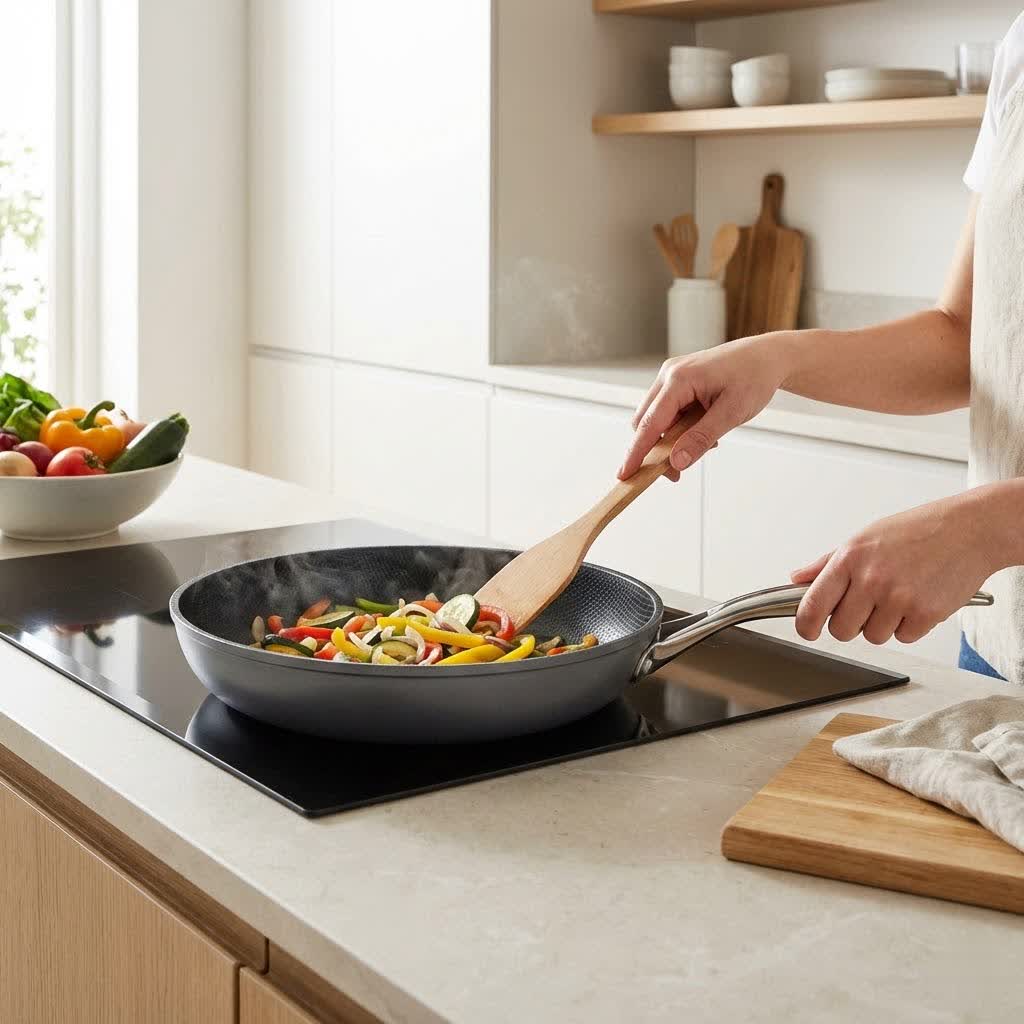
- Utensils: Always use wood, silicone, or plastic utensils with non-stick coatings to prevent scratches. Metal utensils are generally safe for cast iron, carbon steel, and stainless steel, but softer metals can scratch stainless steel.
- Oil Usage: While ceramic non-stick pans require less oil, a small amount is still recommended to enhance non-stick properties and flavor. Stainless steel benefits from oil or fat to prevent sticking.
After Cooking
- Cool Down: Allow pans to cool completely before cleaning. Thermal shock (running a hot pan under cold water) can warp pans or damage non-stick coatings.
- Cleaning:
- Ceramic-Coated: Hand wash with warm, soapy water and a soft sponge or cloth. Avoid abrasive cleaners or scouring pads.
- Cast Iron/Carbon Steel: Scrape off food residue with a spatula, then rinse with hot water. For stubborn bits, use a stiff brush or a chainmail scrubber. Avoid harsh soaps, which can strip seasoning. Dry immediately and thoroughly, then apply a thin layer of oil.
- Stainless Steel: Wash with warm, soapy water and a sponge. For stuck-on food, a paste of baking soda and water can help. Bar Keepers Friend is excellent for restoring shine.
- Storage: Store pans carefully to prevent scratches. Use pan protectors or place paper towels between stacked pans, especially for ceramic-coated ones.
Top PFOA and PFOS Free Pan Recommendations
Based on performance, durability, and user satisfaction, here are some highly regarded PFOA and PFOS free pan options:
- GreenPan Valencia Pro Ceramic Nonstick Cookware Set: Known for excellent non-stick performance and Thermolon™ ceramic coating derived from sand. Oven-safe up to 600°F.
- Caraway Nonstick Ceramic Cookware Set: Praised for its robust ceramic-coated surface, stylish design, and effective non-stick properties. Oven-safe up to 550°F.
- Our Place Always Pan 2.0: A versatile, multi-functional pan often featuring a ceramic non-stick coating, designed to replace several pieces of cookware.
- Xtrema Pure Ceramic Cookware: Made from 100% pure ceramic, offering an ultra-safe option free from PFOA, PFOS, PTFE, and even heavy metals. Very durable and versatile for stovetop, oven, and grill.
- Lodge Seasoned Cast Iron Skillet: An iconic choice for durability and natural non-stick properties that improve with age and seasoning. Excellent for high-heat cooking.
- Made In CeramiClad™ Nonstick: Utilizes a ceramic non-stick coating that is PFOA and PFOS free, known for its performance and high quality.
“Switching to PFOA and PFOS free cookware isn’t just a trend; it’s a conscious decision for better health and environmental responsibility in the kitchen.”
Conclusion
Choosing PFOA and PFOS free pans is a powerful step toward a healthier, more sustainable kitchen. With a growing array of innovative and reliable options, from advanced ceramic coatings to time-tested cast iron, there’s a perfect chemical-free pan for every cooking style and preference. By understanding the materials, prioritizing quality, and committing to proper care, you can enjoy delicious, worry-free meals for years to come. Isn’t it time to transform your cooking experience with the peace of mind that comes from truly chemical-free cookware?
Frequently Asked Questions
Are all ceramic non-stick pans PFOA and PFOS free?
Yes, virtually all ceramic non-stick pans currently on the market are PFOA and PFOS free, as these chemicals were primarily associated with older generations of PTFE (Teflon) coatings. Many ceramic options are also PTFE-free, relying on mineral-based coatings.
How can I tell if my old non-stick pan has PFOA or PFOS?
Most non-stick cookware sold after 2014 in the US and 2008 in Europe is PFOA-free. If you have pans older than these dates, especially those showing wear or scratching, they may contain PFOA. It’s generally recommended to replace old, scratched non-stick pans.
Do PFOA and PFOS free pans really make a difference for health?
Yes, choosing PFOA and PFOS free pans reduces your exposure to these “forever chemicals,” which have been linked to potential health concerns. While research is ongoing for other PFAS chemicals, opting for alternatives like ceramic, cast iron, or stainless steel is a proactive step for chemical-free cooking.
How long do PFOA and PFOS free non-stick coatings last?
The lifespan of PFOA and PFOS free non-stick coatings, particularly ceramic, can vary but is generally shorter than traditional PTFE coatings. With proper care—using low to medium heat, non-metal utensils, and hand washing—they can last for several years.
Can I use metal utensils on PFOA and PFOS free pans?
It is strongly recommended to avoid metal utensils on ceramic-coated non-stick pans, as they can scratch and damage the coating. Wood, silicone, or plastic utensils are best for these. Metal utensils are generally fine for cast iron, carbon steel, and stainless steel pans.