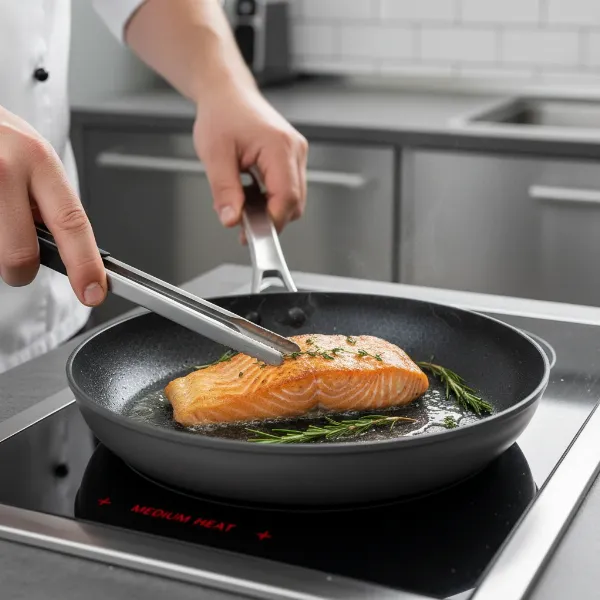
Imagine a world where your pan tells you the precise moment to add ingredients, ensures your steak is perfectly seared every time, and even prevents food from burning. This isn’t a distant dream; it’s the exciting reality emerging with smart non-stick pans equipped with integrated temperature sensors. This revolutionary cookware is transforming kitchens, offering unprecedented precision, convenience, and safety for home cooks and culinary enthusiasts alike.
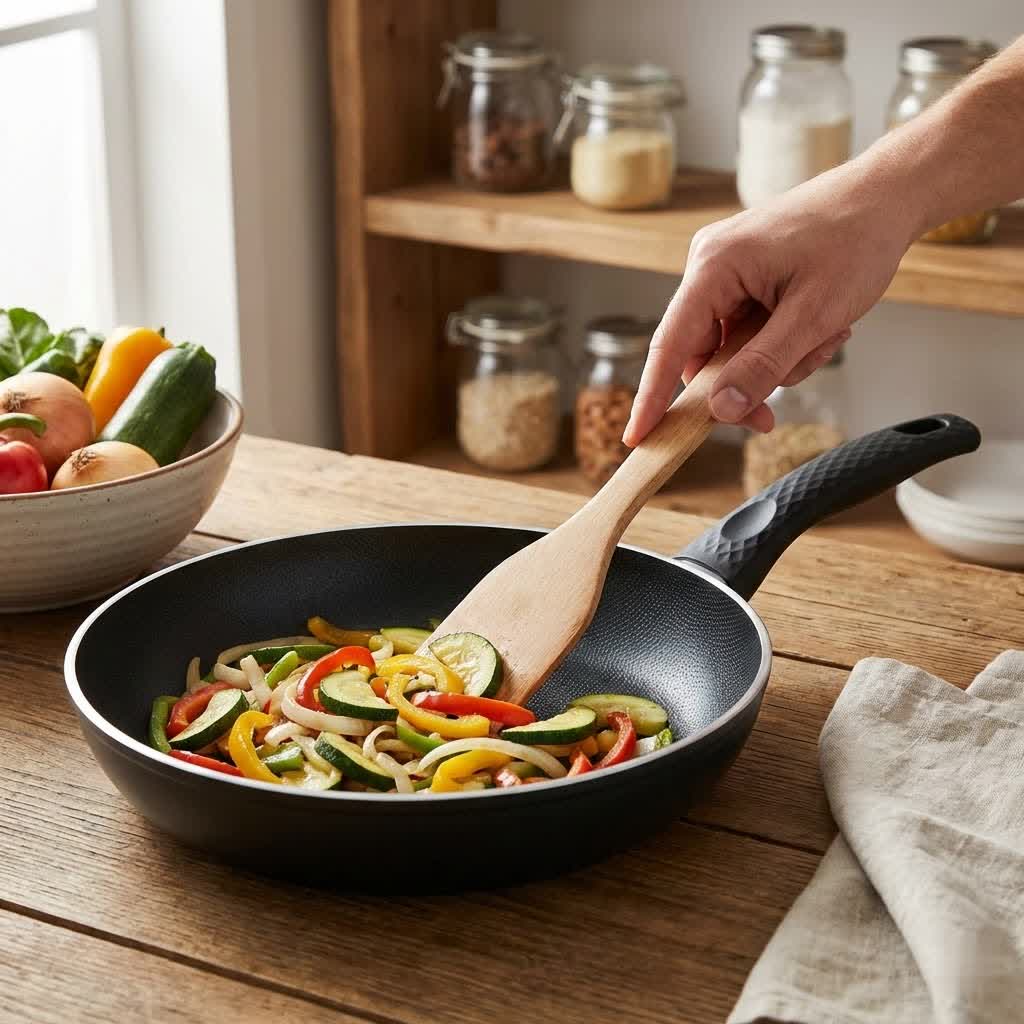
What Are Smart Non-Stick Pans with Temperature Sensors and Why Do They Matter?
Smart non-stick pans with temperature sensors represent a significant leap forward in kitchen technology. At their core, these are conventional non-stick pans, but with advanced electronic components embedded within the cooking surface or handle. These sensors constantly monitor the pan’s temperature, transmitting real-time data to a connected smartphone app or a display on the pan itself. The integration of non-stick properties means food slides off effortlessly, requiring less oil and making cleanup a breeze, while the smart features elevate cooking to a new level of accuracy and ease.
The importance of this innovation cannot be overstated. Traditional cooking often relies on guesswork, leading to inconsistent results, undercooked or overcooked meals, and frustrating experiences. Smart pans eliminate this uncertainty, providing precise control over heat, which is crucial for perfect cooking. From delicate sauces that require specific temperatures to achieve the right consistency, to perfectly seared meats that demand exact heat for that coveted crust, these pans empower users with professional-level precision. This technology not only enhances the quality of meals but also fosters a more enjoyable and less stressful cooking environment.
The Evolution of Cookware: From Basic Non-Stick to Intelligent Design
The journey of cookware has seen remarkable transformations, driven by a continuous quest for better performance and convenience. The introduction of non-stick coatings, primarily PTFE (Teflon), revolutionized home cooking in the mid-20th century, making frying and sautéing easier and healthier by reducing the need for excessive oil. However, early non-stick pans had limitations, including concerns about durability and potential chemical release at high temperatures.
Over time, new materials and technologies emerged. Ceramic and granite coatings offered alternative non-stick solutions, often marketed as more eco-friendly and scratch-resistant. Titanium-reinforced coatings improved durability, making non-stick surfaces more resilient to daily wear and tear. Induction compatibility became standard, catering to the growing popularity of energy-efficient induction cooktops. Yet, even with these advancements, the fundamental challenge of temperature control remained largely manual, relying on a cook’s experience and intuition.
The latest evolution introduces “smart” capabilities, integrating digital technology directly into the pan. This began with simple temperature indicators and has rapidly progressed to sophisticated sensor systems capable of communicating wirelessly. These innovations move cookware beyond mere heating vessels, transforming them into intelligent tools that actively assist in the cooking process, guiding users towards culinary success.
Key Technologies and Features Driving Smart Non-Stick Pan Innovation
The intelligence behind smart non-stick pans with temperature sensors is built upon several key technological advancements and innovative features. Understanding these components reveals how these pans deliver such precise and convenient cooking experiences.
Integrated Temperature Sensors
|
Our Picks for the Best Non stick pan in 2026
As an Amazon Associate I earn from qualifying purchases.
|
||
| Num | Product | Action |
|---|---|---|
| 1 | Non Stick Frying Pans, 12-inch with Lid, Hybrid Fajita Pans Nonstick,non stick Skillets Stainless Steel, Dishwasher & Oven-Safe, Induction Compatible Cooking Pan, PFOA Free Cookware |

|
| 2 | Tramontina Professional 8-Inch Non Stick Small Frying Pan, Heavy-Gauge Aluminum Skillet with Reinforced Nonstick Coating, Red Handle, Dishwasher and Oven Safe |
|
| 3 | GoodCook Nonstick Sauté Pan, 10 Inch, Black |
|
| 4 | SENSARTE Nonstick Frying Pan Skillet, Swiss Granite Coating Omelette Pan, Healthy Stone Cookware Chef's Pan, PFOA Free (9.5 Inch) |
|
| 5 | SENSARTE Nonstick Frying Pan Skillet, Swiss Granite Coating Omelette Pan, Healthy Stone Cookware Chef's Pan, PFOA Free (8/9.5/10/11/12.5 Inch) (8 Inch) |
|
| 6 | SENSARTE Nonstick Skillet, Deep Frying Pan 10/11/12-inch, Saute Pan with Lid, Stay-cool Handle, Healthy Stone Cookware Cooking Pan, Induction Compatible (10-Inch/3.5QT) |
|
| 7 | CAROTE Nonstick Frying Pan Skillet,Non Stick Granite Fry Pan Egg Pan Omelet Pans, Stone Cookware Chef's Pan, PFOA Free,Induction Compatible(Classic Granite, 8-Inch) |
|
| 8 | Blue Diamond 10" Nonstick Frying Pan Skillet, Diamond Infused PFAS & PTFE-Free Ceramic Pot, Dishwasher & Oven Safe, Stay Cool Handle, Durable Non Toxic Metal Utensil Safe, Egg & Omelet Pan, Blue |
|
| 9 | Tramontina Professional 10-Inch Non Stick Frying Pan, Heavy-Gauge Aluminum Skillet with Reinforced Nonstick Coating, Red Handle, Dishwasher and Oven Safe |
|
| 10 | SENSARTE Nonstick Frying Pan Skillet with Lid, 12 Inch Large Deep Frying Pan, 5 Qt Non Stick Saute Pan with Cover, Induction Pan, Healthy Non Toxic Cooking Pan with Helper Handle, PFOA PFOS Free |
|
At the heart of these smart pans are highly accurate temperature sensors, typically thermistors or thermocouples, strategically placed to measure the cooking surface’s heat. These sensors provide real-time data, often with an accuracy of within a few degrees, which is crucial for delicate tasks like tempering chocolate or achieving the perfect internal temperature for meats.
Bluetooth or Wi-Fi Connectivity
Most smart pans connect to a smartphone or tablet via Bluetooth, while more advanced models may utilize Wi-Fi for extended range and cloud integration. This connectivity allows the pan to transmit temperature readings, receive cooking instructions, and even update firmware.
Dedicated Mobile Applications
A companion app is essential for the smart pan experience. These apps typically feature:
- Real-time temperature display: Visualizing the pan’s current heat.
- Guided cooking recipes: Step-by-step instructions, prompting users for actions based on pan temperature or cooking time.
- Temperature presets: Allowing users to select desired temperatures for specific dishes.
- Notifications and alerts: Informing users when the pan reaches a target temperature or when food needs to be flipped.
- Cooking history and analytics: Tracking past cooking sessions to help users improve.
Non-Stick Coatings
While the “smart” aspect is the innovation, the “non-stick” property remains fundamental. Modern smart pans typically feature advanced non-stick coatings such as:
- PTFE (Teflon) variants: Often reinforced with ceramic, titanium, or diamond particles for enhanced durability and scratch resistance, while maintaining excellent food release.
- Ceramic-based coatings: Offering a naturally non-stick, mineral-derived surface that is often PFOA/PFOS-free and can withstand higher temperatures.
- Hybrid coatings: Combining different materials to leverage their best properties, such as the durability of titanium with the slickness of PTFE.
Battery Life and Charging
Since these pans contain electronics, they require power. Many smart pans use rechargeable batteries, often charged via USB or magnetic docks. Battery life varies but is typically designed to last for several cooking sessions. Some designs feature induction-compatible power transfer, eliminating the need for direct charging ports on the pan.
Induction Compatibility
The majority of new smart non-stick pans are designed with an induction-compatible base, making them versatile for use on various stovetops, including gas, electric, ceramic, and induction. This broad compatibility ensures a wider appeal and usability.
The Benefits of Integrating Smart Technology into Your Cookware
Adopting smart non-stick pans with temperature sensors brings a multitude of advantages to the modern kitchen, enhancing everything from cooking precision to overall culinary enjoyment.
- Unparalleled Cooking Precision: The most significant benefit is the ability to maintain precise temperatures. This eliminates guesswork, ensuring consistent results whether you’re searing scallops, making delicate custards, or frying eggs. For dishes that require specific heat levels, like tempering chocolate, these pans are invaluable.
- Reduced Food Waste and Improved Safety: By preventing overcooking or burning, smart pans minimize food waste. The precise temperature control also contributes to food safety, ensuring meats reach their optimal internal temperature without drying out.
- Enhanced Learning and Skill Development: For novice cooks, the guided cooking features and real-time feedback act as a virtual culinary instructor, helping them learn proper techniques and understand the impact of temperature on food. Experienced cooks can experiment with new recipes and achieve restaurant-quality results more consistently.
- Time-Saving and Convenience: Smart notifications mean you don’t have to constantly hover over the pan. You can prepare other ingredients while the pan heats, receiving an alert when it’s ready. Cleanup is also simplified thanks to the non-stick surfaces, reducing scrubbing time.
- Healthier Cooking: The excellent non-stick properties mean less oil or butter is needed for cooking, supporting healthier meal preparation without sacrificing flavor or texture.
- Consistency Across Dishes: Whether you’re cooking the same meal every week or trying a new recipe, smart pans help achieve consistent outcomes, making meal planning and preparation more reliable.
- Future-Proofing Your Kitchen: Investing in smart cookware aligns your kitchen with the growing trend of smart home technology, preparing it for future integrations and functionalities.
“Smart cookware isn’t just a gadget; it’s a fundamental shift towards making professional-level cooking accessible to everyone. The precision it offers transforms everyday meals into culinary achievements.” – Chef Antoine Dubois, Culinary Technology Innovator
Challenges and Considerations for Adopting Smart Non-Stick Pans
While the benefits of smart non-stick pans are compelling, potential users should also be aware of the challenges and considerations associated with this emerging technology.
- Cost: Smart cookware tends to be significantly more expensive than traditional non-stick pans due to the integrated electronics, advanced sensors, and R&D costs. This higher upfront investment might be a barrier for some consumers.
- Durability and Lifespan of Electronics: Pans are subjected to high heat, frequent washing, and physical handling. The long-term durability of embedded electronic components under these conditions is a key concern. While manufacturers design for resilience, the lifespan of the smart features may not always match that of the pan’s physical structure.
- Battery Dependency: Smart pans require power, meaning they need to be charged. Forgetting to charge the pan could render its smart features unusable, reverting it to a basic non-stick pan.
- Connectivity Issues: Reliance on Bluetooth or Wi-Fi can lead to occasional connectivity problems, such as dropped signals or pairing difficulties, which can disrupt the cooking experience.
- App Dependency and Updates: The functionality of smart pans is heavily dependent on their companion apps. If an app is no longer supported, or if constant updates are required, it could impact the user experience. Compatibility with various smartphone operating systems also needs to be maintained.
- Learning Curve: While designed for convenience, there can be a slight learning curve to fully utilize all the features of a smart pan and its app. Users might need to adapt to a more guided, digitized cooking process.
- Repairability and Environmental Impact: The integration of electronics can make these pans harder to repair if a component fails, potentially leading to earlier disposal than a traditional pan. The environmental impact of electronic waste (e-waste) is also a consideration.
- Privacy Concerns: Like all connected devices, there might be minor concerns regarding data privacy, though most cooking data is innocuous and used for performance improvement.
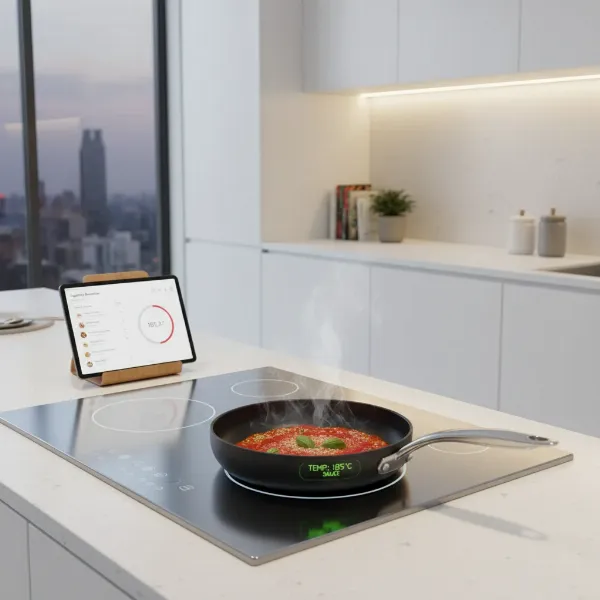 A sleek smart non-stick pan with temperature sensor on an induction cooktop, connected to a tablet displaying cooking data.
Looking Ahead: The Future Evolution of Smart Cookware
The current generation of smart non-stick pans with temperature sensors is just the beginning. The future of cookware promises even more sophisticated and integrated technologies that will further revolutionize our kitchens.
One major trend will be enhanced AI and machine learning integration. Future smart pans might not just provide guidance but actively learn user preferences, cooking habits, and even ingredient characteristics. Imagine a pan that automatically adjusts heat based on the type and quantity of food you’ve added, or one that suggests recipes tailored to your previous successful cooks.
Improved sensor technology will move beyond just temperature. We could see sensors capable of detecting food doneness (e.g., internal meat temperature, moisture levels, browning indices), allowing for even more precise, automated cooking. Integration with smart kitchen ecosystems will become seamless, with pans communicating not only with your phone but also with smart ovens, refrigerators (suggesting recipes based on available ingredients), and even smart ventilation systems.
Energy efficiency will also be a key focus. Future smart pans might optimize energy consumption by precisely controlling heat input, potentially leading to more sustainable cooking. Furthermore, advancements in material science could lead to self-cleaning non-stick surfaces or coatings that are virtually indestructible, making these sophisticated tools even more durable and maintenance-free.
Finally, haptic feedback and more intuitive interfaces directly on the pan (e.g., tactile buttons, integrated touchscreens) could reduce reliance on external devices, making the smart features more accessible and immediate during the cooking process. The ultimate vision is a kitchen where cookware is an intelligent, indispensable partner, making gourmet cooking accessible and effortless for everyone.
Conclusion
Smart non-stick pans with integrated temperature sensors are redefining what’s possible in the kitchen. By combining the convenience of non-stick surfaces with the precision of real-time temperature monitoring, these innovative tools empower cooks of all skill levels to achieve consistent, high-quality results. While considerations like cost and electronic durability exist, the myriad benefits—from unparalleled precision and healthier cooking to enhanced safety and a more enjoyable culinary journey—make a compelling case for their adoption. As technology continues to advance, we can anticipate even smarter, more intuitive cookware that will further transform our relationship with food preparation, making every meal a masterpiece. Are you ready to embrace the intelligent kitchen of tomorrow?
Frequently Asked Questions
What are the main advantages of a smart non-stick pan with a temperature sensor?
The primary advantages include precise temperature control for consistent cooking results, guided cooking features through a companion app, healthier cooking with less oil due to excellent non-stick properties, and enhanced safety by preventing overcooking or burning. These pans take the guesswork out of cooking, making it more accessible and enjoyable.
Are smart non-stick pans safe to use?
Yes, reputable smart non-stick pans are designed with safety in mind. They use food-grade non-stick coatings, often PFOA/PFOS-free, and their electronic components are typically sealed and protected. The temperature sensors actually enhance safety by preventing overheating and ensuring food is cooked to safe temperatures.
How do I clean and maintain a smart non-stick pan?
Generally, smart non-stick pans should be cleaned by hand with warm, soapy water and a soft sponge. Avoid abrasive scrubbers or metal utensils, as these can damage the non-stick coating and potentially the electronic components. Most manufacturers advise against putting them in a dishwasher to protect the integrated electronics and maintain battery integrity.
Do smart non-stick pans work on all stovetops?
Many modern smart non-stick pans are designed to be compatible with various stovetops, including gas, electric, ceramic, and induction. Always check the product specifications for specific compatibility, especially if you have an induction cooktop, as it requires a magnetic base.
What is the typical battery life of a smart pan’s sensors?
Battery life varies by brand and model, but most smart pans are designed to last for several cooking sessions (e.g., 20-40 hours of active use) on a single charge. They usually come with a USB charger or a magnetic charging dock, and some might have battery indicators on the pan or in the app to notify you when charging is needed.